

FAA Funded Research
Cold-Soaked Fuel Frost Aircraft Roughness
Technical Lead
2017-2018
Overview
As technical lead for a research contract with the FAA, I formulated an experimental method and analyzed complex data sets to understand psychrometric frost roughness formation in application to cold-soaked fuel frost on aircraft takeoffs. My receptive listening to the FAA's desires and clear presentation of results helped lead to additional years of funding. My research (outlined below) increased my skills in experimental design, computational analysis, instrumentation, and knowledge of working with the FAA.
A Photogrammetric Method for Measuring Transient Frost Surface Roughness

Thesis Abstract
Cold-soaked fuel frost (CSFF) is a form of aircraft wing contamination that results in aerodynamic degradation. Unless a certification exemption for a specific aircraft model is provided by the FAA, an aircraft operator is not allowed to takeoff with CSFF on wing surfaces. To assist manufacturers in the design of air vehicles and to assist the FAA in evaluating exemption requests, frost roughness evolution must be characterized and modeled. However, measuring transient frost roughness has never been achieved with high precision. This experimental investigation establishes a nonintrusive, in-situ method of measuring frost roughness using micro photogrammetry. This method was validated with fabricated surfaces and was integrated on a closed-loop psychrometric wind tunnel that is capable of procuring frost formations in various environmental conditions. The resulting roughness parameters and detailed height distributions were analyzed to determine the effects of each environmental variable. Concluding remarks detail the general conditions that cause the most critical circumstances for CSFF aircraft takeoffs.

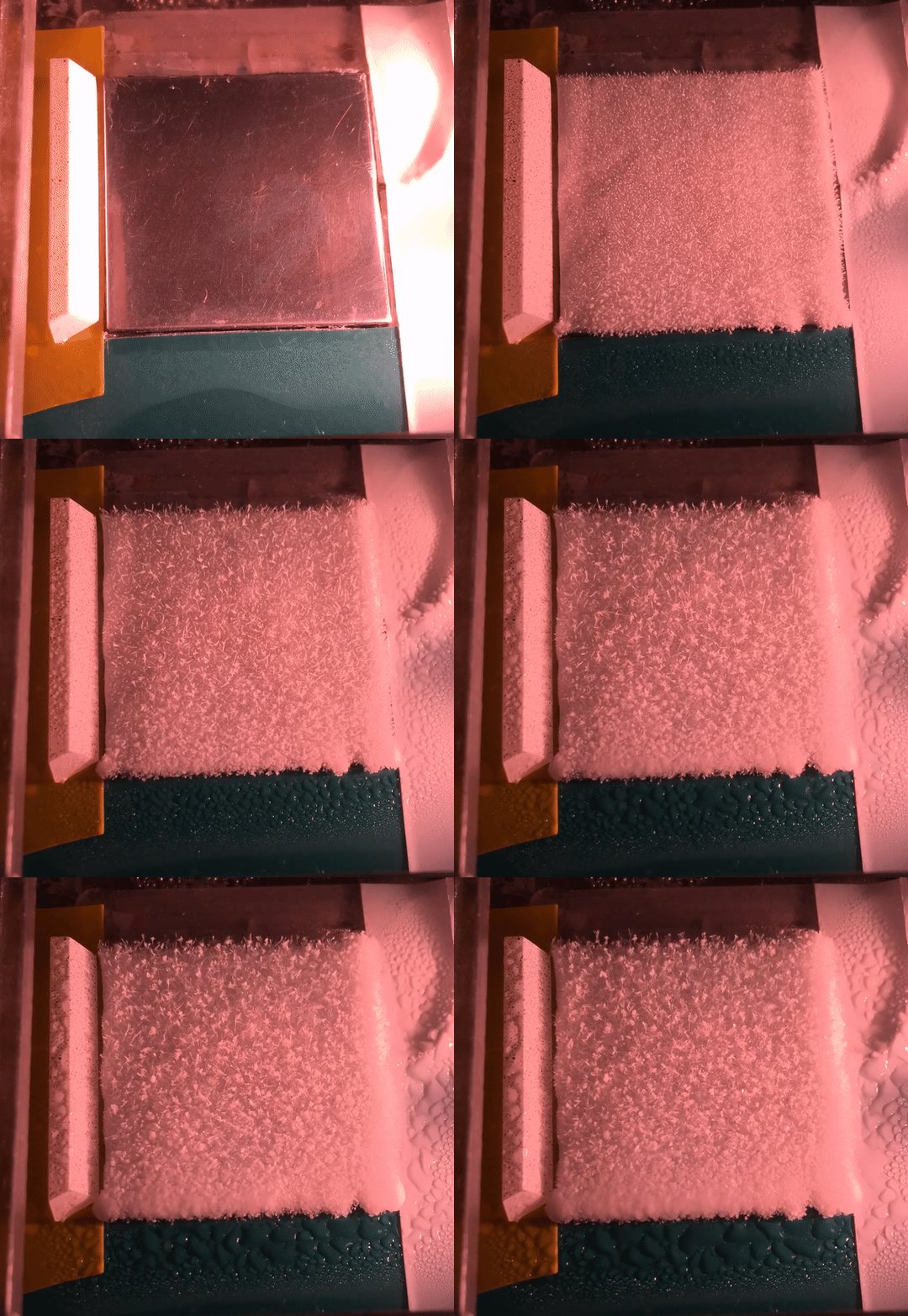
This transient frost roughness demonstrates the type of skin friction accretion that was measured to determine aerodynamic degradation. (Time Lapse: 4x)
The closed loop wind tunnel features a adjustable-speed blower, humidification system, heat exchangers and Peltier controlled test surface.
Methodology
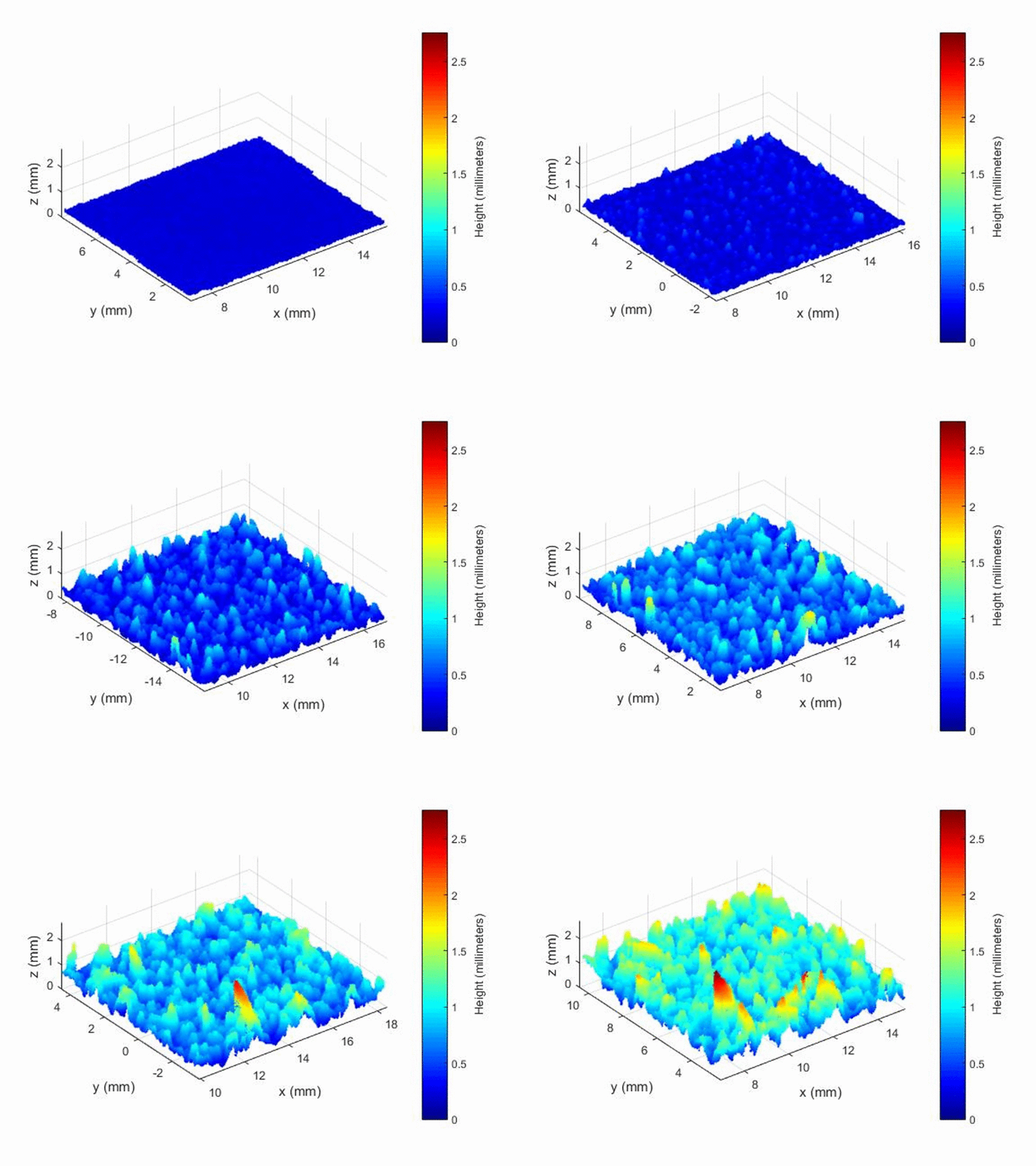
The 3D models of the frost surface portray detailed height distributions and may be combined to portray the frost development . (Time Lapse: 10x)
The measurement method uses a structure from motion, aerial-view to capture frost surface images. The images are computationally analyzed together, using a photogrammetric algorithm to create a detailed 3D model.
RMS Height

Skewness

Equivalent Sand-Grain Roughness

Numerical computations were used to determine surface roughness parameters applicable to aerodynamic assessment.

Results: Most Significant Factor - Air Velocity
The most significant environmental factor that affects frost roughness is air velocity. One of the more critical cases of frost roughness to the aerodynamic takeoff of an aircraft is for environmental conditions with slower air velocities.
